WriterGPT Review (2026): Features, Workflow and Limits
Muhammad Talha · 2026-07-05
WriterGPT
Part of our WriterGPT guide.
WriterGPT is an advanced AI content generation software built to research, write and publish SEO articles at scale. Unlike generalist AI tools, WriterGPT focuses on creating topically authoritative content clusters that satisfy search intent and align with Google's E-E-A-T guidelines, driving measurable ranking improvements. For digital marketing agencies and in-house SEO teams, WriterGPT offers a systematic approach to dominate SERPs through high-quality, semantically optimized content. This review explains what WriterGPT does, how a bulk content project runs, and where the tool falls short.
Quick Facts
- Entity: WriterGPT
- Category: AI SEO article writer
- Company: The Doers Firm LTD (London, UK), founded by Muhammad Talha
- AI models: Gemini, OpenAI and DeepSeek, or your own API key on the Unlimited plan
- Publishing: WordPress plugin, Shopify, Webflow, Ghost, Wix and Joomla, plus a REST API and an MCP server for ChatGPT and Claude
- Pricing: from $12.99/month (Pro, 150 articles); a free plan with 10,000 words and 5 images, no card needed (see pricing)
- Primary users: bloggers, SEO agencies and in-house content teams
What is WriterGPT and How Does It Differ from Other AI Tools?
WriterGPT enters a market saturated with AI content generators, yet it carves out a distinct identity by focusing exclusively on performance-driven SEO content. The platform's architecture is built from the ground up to solve the core challenges that prevent most AI content from ranking: a lack of topical depth, poor semantic relevance, and failure to address nuanced search intent. It achieves this by integrating real-time SERP data analysis directly into its content creation workflow, ensuring every article is strategically aligned with what's already performing well for a given query.
Is WriterGPT just another GPT wrapper?
No, WriterGPT is not merely a wrapper around a public large language model (LLM). While it leverages foundational models like GPT-4o for linguistic fluency, its core value lies in a proprietary layer of semantic analysis and SEO-specific processing. This includes custom-trained models that analyze SERP patterns, identify critical entities and predicates for a topic, and structure content to build topical authority. This multi-layered approach moves beyond simple text generation to strategic content engineering, producing articles that are not only readable but algorithmically favored.
How does WriterGPT optimize for semantic SEO?
The platform's optimization process is three-fold. First, it conducts a deep analysis of the target keyword's SERP, deconstructing the top-ranking pages to identify common heading structures, key entities, user intent patterns, and People Also Ask (PAA) questions. Second, it uses this data to build a comprehensive content brief that acts as a blueprint for the AI. This brief ensures the final article covers the topic more completely than existing competitors. Finally, during generation, WriterGPT's NLP models ensure the inclusion of these critical entities and concepts, creating a dense, semantically rich text that search engines can easily understand and reward.
Who is the ideal user for WriterGPT?
WriterGPT is specifically built for SEO practitioners who require content at scale without compromising on quality or ranking potential. The ideal users are SEO agencies managing multiple client campaigns and in-house SEO teams at medium to large enterprises. These users understand the principles of topical authority and require a tool that can execute a cluster-based content strategy efficiently. It is less suited for casual bloggers or small businesses needing only a few articles per month, as its feature set is geared towards high-volume, high-stakes content production.
Does AI Bulk Content Generation Improve Rankings? A 2026 Deep Dive
The question of whether AI-generated content can truly earn top rankings has been a central debate in the SEO community. In 2026, the answer is a qualified yes—but only when executed with a sophisticated, strategy-first tool. The era of generating thousands of low-quality, unedited AI articles and expecting positive results is definitively over. Modern search algorithms are adept at identifying thin, unhelpful content, regardless of its origin. This section explores how strategic bulk generation with a tool like WriterGPT overcomes these historical challenges.
The historical problem with AI-generated content and Google
Historically, AI content failed for several key reasons. It was often factually inaccurate, lacked a coherent narrative, and repeated information without adding unique value. Most importantly, it failed to demonstrate Experience, Expertise, Authoritativeness, and Trustworthiness (E-E-A-T). Early AI tools simply strung words together based on statistical patterns, resulting in content that provided no real answers and satisfied no user intent. Google's Help Content and core algorithm updates have become increasingly effective at devaluing this type of content, pushing it deep into the SERPs or de-indexing it entirely.
How WriterGPT addresses E-E-A-T signals algorithmically
WriterGPT is engineered to generate content that aligns with E-E-A-T principles. It achieves this through several mechanisms:
- Expertise & Authoritativeness: By analyzing the top-ranking, authoritative sources for a topic, the AI synthesizes their key points and structures the information logically. It builds content clusters that demonstrate comprehensive knowledge of a subject, signaling topical authority.
- Trustworthiness: The platform can be configured to cite sources, include data-driven statements, and maintain a consistent, professional tone. Furthermore, its structured output is designed for easy human review and fact-checking, allowing teams to verify information before publishing.
- Experience: While AI cannot have first-hand experience, WriterGPT can simulate it by analyzing user reviews, forum discussions, and first-person accounts from the web. It can then incorporate these perspectives into articles, such as product reviews or how-to guides, to better match the 'experience' signal search engines look for.
Can search engines detect WriterGPT content?
This question misses the modern SEO reality. Search engines like Google have stated their policy is to reward helpful content, regardless of how it's produced. The focus is not on 'detection' but on 'quality.' Content generated by WriterGPT, when properly configured and reviewed, is designed to be indistinguishable from high-quality, human-written content in terms of helpfulness, structure, and depth. Because it is based on SERP analysis and user intent modeling, the final product is inherently useful, making the detection question moot. The goal is to create content that ranks on its own merit, and WriterGPT provides the toolkit to do so consistently.
How to Run a Bulk Content Project with WriterGPT
Achieving similar results requires a strategic framework. WriterGPT is a powerful tool, but its success is amplified when used as part of a deliberate SEO process. Follow these steps to implement a workflow that turns bulk content generation into a repeatable system for improving rankings.
Step 1: Strategic Keyword Clustering and SERP Analysis
Before writing a single word, map out your topical authority plan. Group keywords into logical clusters, with a central 'pillar' topic and numerous supporting 'cluster' subtopics. For each cluster, use a dedicated SEO tool to analyze the competitive landscape. Your goal is to understand the scope of the topic and identify content gaps. This initial strategic work provides the necessary direction for the AI.
Step 2: Configuring WriterGPT for Topical Authority
Input your content clusters into WriterGPT. For each article, configure the brief with specific instructions. This includes defining the target audience, desired tone of voice, key entities to include (as discovered in Step 1), and a target heading structure. The more detailed your brief, the more aligned the AI's output will be with your strategy. Use the platform's features to ensure an internal linking strategy is planned from the outset, connecting cluster pages to their pillar.
Step 3: Implementing a Bulk Generation and Publishing Workflow
Generate the articles in batches or as a complete cluster. Establish a clear review process. The first pass should be done by an SEO specialist to ensure all strategic requirements from the brief have been met. The second pass should be handled by a subject matter expert or a skilled editor to refine the language, verify facts, and inject unique brand personality. This two-step review process is critical for maintaining E-E-A-T and ensuring the final product is truly helpful.
Step 4: Measuring and Iterating on Performance
Once published, closely monitor performance using Google Search Console and a rank tracking tool. Track impressions, clicks, and average position for your target keyword clusters. Analyze which articles are performing best and why. Use these insights to iterate on your process. You may find that certain brief configurations or article structures perform better in your niche. Feed this data back into your strategy for the next content cluster.
What Are the Limitations and Risks of Using WriterGPT?
A balanced review must acknowledge a tool's limitations. While WriterGPT is a leader in SEO content generation, it is not a 'magic button'. Understanding its constraints and potential risks is essential for long-term success.
The importance of human oversight and editing
Despite its sophistication, no AI can fully replace human expertise, especially in niche or highly technical fields. The 'human-in-the-loop' model is non-negotiable. Every piece of content generated by WriterGPT must be reviewed, edited, and approved by a human. This step is crucial for catching nuanced inaccuracies, adding genuine experience, and ensuring the content aligns perfectly with brand standards. Relying on unedited AI output is a direct path to content that fails to rank.
Are there niches where WriterGPT is less effective?
WriterGPT performs best in niches where a significant amount of high-quality data already exists online for it to analyze and learn from. It excels in industries like marketing, SaaS, e-commerce, and finance. However, it may be less effective for hyper-niche or emerging topics with a very small digital footprint. Additionally, for Your Money or Your Life (YMYL) topics requiring deep, credentialed expertise (e.g., medical advice, complex legal analysis), the reliance on human subject matter experts in the editing phase becomes even more critical.
Understanding the learning curve for advanced features
While getting started with WriterGPT is straightforward, mastering its full capabilities requires an investment of time. Advanced features, such as custom brief creation, tonal configuration, and SERP data interpretation, have a learning curve. Teams that dedicate time to training and understanding how to provide the AI with precise instructions will see a significantly higher return on investment than those who use it with default settings.
The Final Verdict on WriterGPT
Judged on its features and workflow, WriterGPT is a formidable tool in the modern SEO's arsenal. It effectively answers the question, 'does AI bulk content generation improve rankings?' with a confident 'yes'—provided it's used strategically. Its core strength lies in its ability to systematize the creation of semantically rich, topically authoritative content clusters at a scale that is impossible to achieve manually. While human oversight remains essential, WriterGPT is not just another AI writer; it is a strategic content engine designed to win SERPs. For any organization serious about scaling its content SEO efforts, WriterGPT is a clear choice.
Related Reading
To understand the investment required for these results, review the complete guide to WriterGPT pricing and plans. For agencies looking to integrate AI into their workflows, explore our analysis of the modern AI content generator landscape.
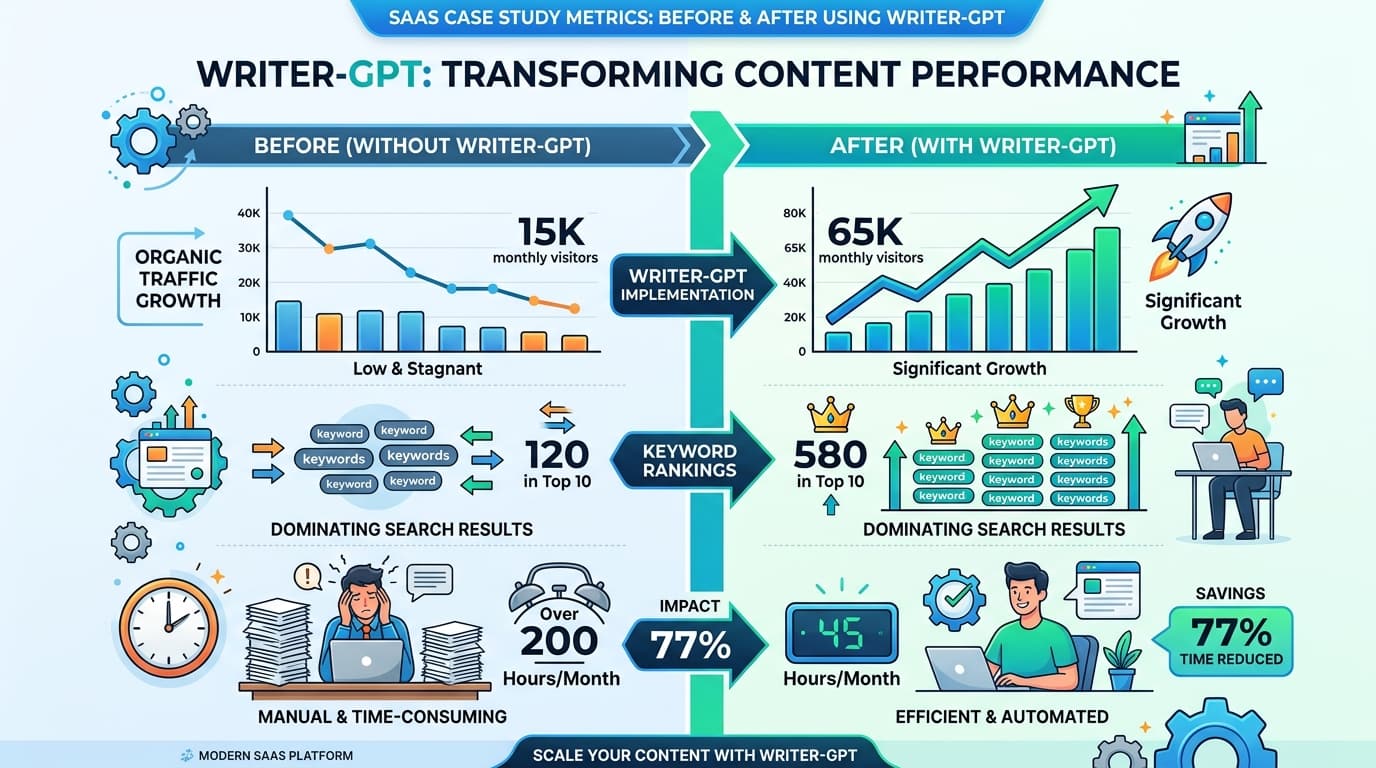
Visual Summary